APPLICATION
Laser Technology in the Mold & Tooling Industry
In the mold and tooling industry, precision and durability are everything. Laser systems provide non-contact, micro-accurate processing with minimal thermal distortion—making them ideal for working with hard metals, complex textures, and high-precision components. Compared to traditional machining or chemical methods, laser technology offers unmatched automation potential, cleaner processing, and greater material compatibility, supporting the shift toward smarter, greener manufacturing.
Laser Welding for Precision Mold Repair
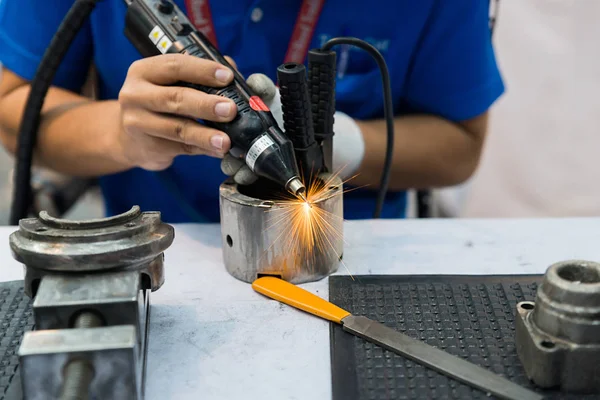
Laser welding enables high-precision repair of worn edges, cracks, and defects in molds—especially in high-hardness steels like H13, SKD61, and S136.
Laser technology is rapidly replacing traditional methods in the mold and tooling industry thanks to its unique advantages: non-contact processing, pinpoint accuracy, low thermal input, and easy integration into automation systems. Unlike mechanical grinding or chemical treatments, laser processing reduces material waste, speeds up production, and improves the quality and repeatability of repairs and surface treatments.
Applications:
- Filling worn edges in injection molds
- Micro-crack repair in die-casting tools
- Local reinforcement of high-wear zones
Laser Cleaning for Mold Maintenance
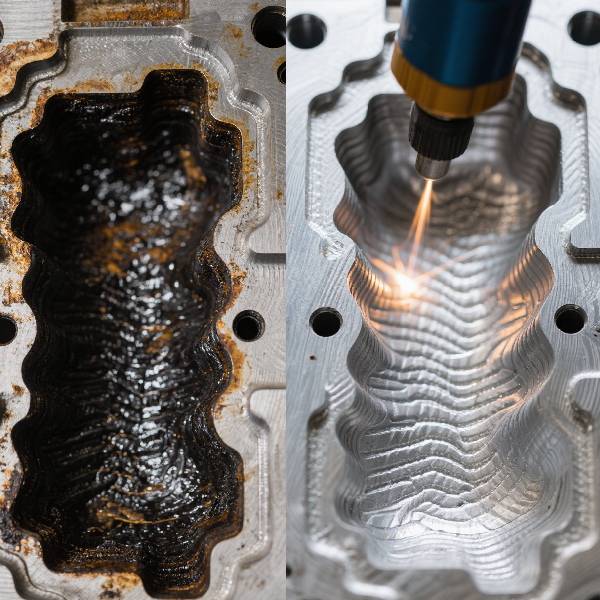
Laser cleaning for molds offers a chemical-free, non-damaging way to remove oxidation, carbon buildup, and oil from mold surfaces. It reaches deep grooves, microstructures, and textured zones where other tools fail. Unlike abrasive or chemical methods, lasers remove surface contaminants—such as carbon buildup, oxidation, and oil residue—without damaging textured or complex surfaces.
Laser beams can reach deep grooves and microstructures, improving both mold cleanliness and part ejection quality.By improving surface condition, laser cleaning enhances part release quality and prevents contamination in molding processes—ideal for injection molds, die-casting tools, and precision components.
Typical Applications:
- Injection Mold Cavity Cleaning: Remove plastic residue, burned polymers, and vent clogging from deep cavity structures.
- Die-Casting Mold Carbon Removal: Effectively eliminate carbonized oil and metal oxide deposits from hot mold surfaces.
- Texture & Groove Restoration: Safely clean textured surfaces, anti-slip patterns, or micro-engraved logos without blurring or abrasion.
- Laser Maintenance for Multi-Cavity Molds: Ensure uniform mold performance across all units, minimizing downtime and manual rework.
Laser Engraving & Marking for Tooling Identification
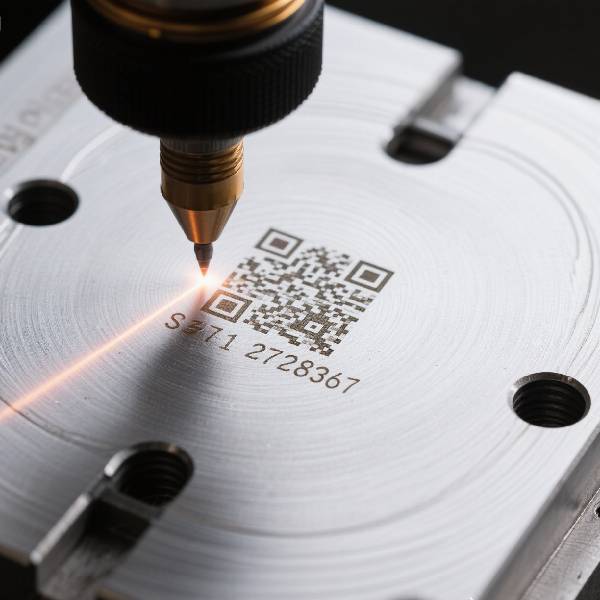
Laser engraving and marking provide a permanent, precise, and maintenance-free method to label and customize mold components. Unlike ink printing or mechanical etching, laser systems deliver high-contrast marks that resist heat, wear, and chemical exposure—ideal for high-duty environments such as injection molding, die-casting, and precision tooling.
For tooling identification, lasers can mark serial numbers, barcodes, part IDs, or logos directly onto the mold surface. This supports traceability, inventory control, and regulatory compliance throughout the mold’s life cycle.
Beyond marking, laser texturing enables the direct engraving of functional micro-patterns, such as anti-slip zones, branding elements, or anti-counterfeit textures. These can be used as part of the molded product’s surface, eliminating secondary finishing processes and enhancing product functionality or aesthetics.
- No fading or smudging over time
- Supports traceability and compliance
- No additional inks, chemicals, or labels needed
- Suitable for steel, aluminum, copper, and coated tooling materials
- Micron-level precision for both large and ultra-fine engraving tasks
Real-World Applications and Proven Success