Medical Devices
Applications of Laser Technology in the Medical Device Industry
As medical technology continues to advance, laser technology—known for its high precision, non-contact processing, and minimal heat-affected zones—is being increasingly adopted in the design, manufacturing, and maintenance of medical devices. It has become a key driver in upgrading the medical industry.

Laser Welding
Precise Joining for Sealing and Strength
Implantable medical devices—such as pacemakers, metal catheters, and insulin pumps—must meet the highest standards for gas tightness, mechanical strength, and biocompatibility. Even the smallest defect at a weld joint can compromise patient safety and device performance.
Laser welding provides a superior solution:
- Achieve hermetic sealing that prevents fluid ingress or leakage
- Join thin-walled titanium or stainless steel without causing warping or micro-cracks
- Eliminate the risk of contamination from filler materials or mechanical contact
- Ensure repeatability and consistency in high-volume production
Laser Marking
Permanent Identification for Traceability
Using advanced laser technology—such as fiber lasers, UV lasers, or green lasers—manufacturers can create permanent, high-contrast markings on a wide range of medical-grade materials including stainless steel, titanium, polymers, and ceramics.
Key advantages include:
- Resistant to sterilization, autoclaving, and chemical exposure
- Crisp, high-resolution contrast on metals and plastics
- Full compliance with UDI and MDR coding requirements
- Capable of marking at microscopic scale for small or delicate components
- No mechanical stress or thermal distortion
Laser Cutting
High-Precision Microfabrication for Complex Structures
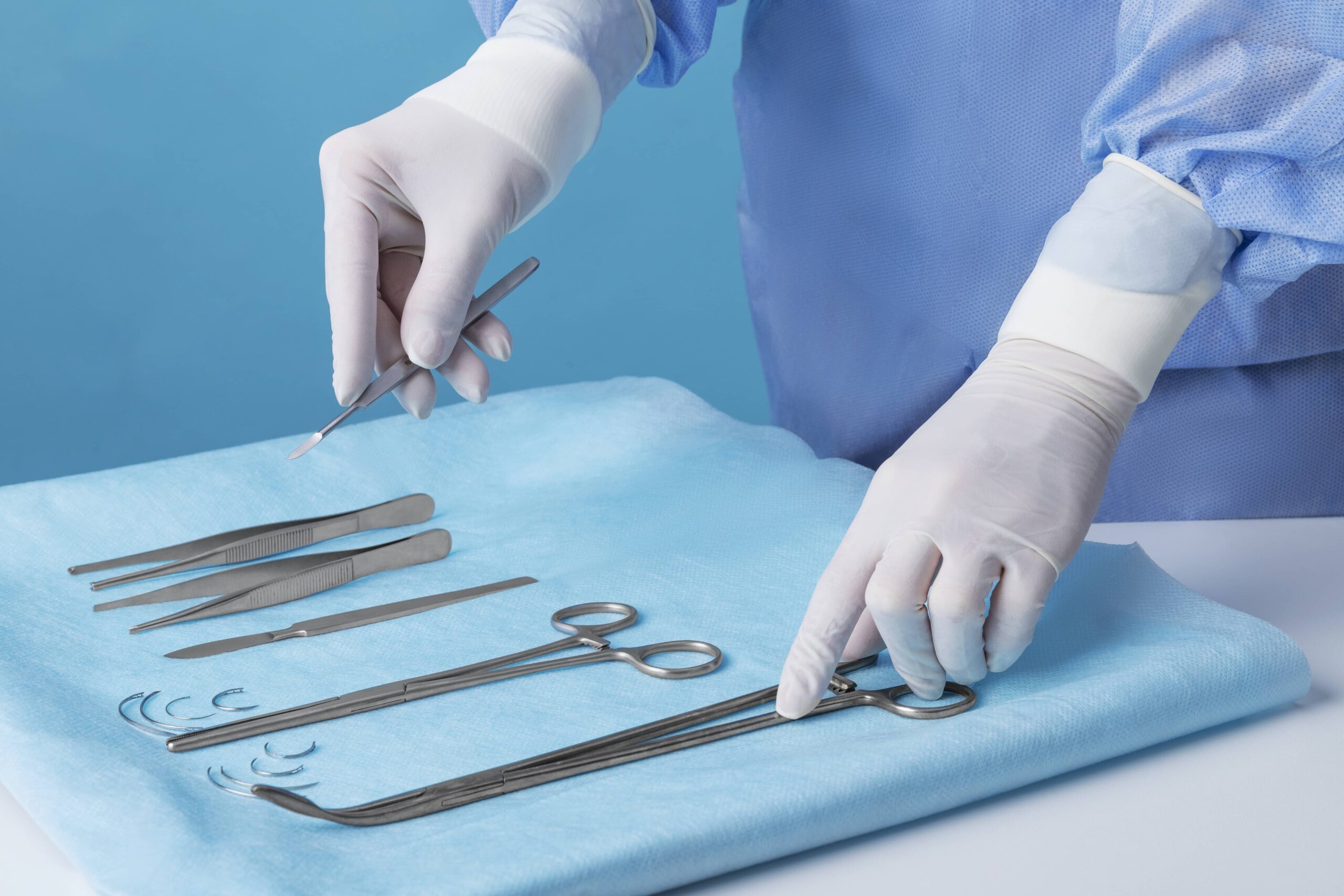
Laser cutting is a vital process in the manufacturing of medical devices that require extreme precision, cleanliness, and structural integrity.This non-contact cutting method enables the production of intricate geometries with micron-level accuracy, making it ideal for vascular stents, microsurgical tools, catheters, and endoscopic components.
Key Advantages:
- Micro-scale accuracy for fine-featured parts
- Minimal heat-affected zones, preserving material properties
- Clean cuts without mechanical stress or contamination
- Supports high-volume automated production
- Compliant with medical safety and traceability standards
Advancing Medical Device Lifecycle with Laser Technology


Laser Technology in Device Maintenance
High-value medical equipment—such as surgical instruments, orthopedic implants, and endoscopic tools—requires rigorous cleaning and reprocessing to ensure patient safety and compliance with healthcare standards. Laser cleaning technology provides an advanced, non-contact, and chemical-free method for removing surface contaminants including oxidation layers, oils, and biological residues without damaging the underlying material.
This precision cleaning technique significantly reduces the risk of cross-contamination and device failure, while enhancing operational efficiency by shortening turnaround times. Additionally, laser cleaning supports environmental sustainability by eliminating the need for harsh chemicals and reducing wastewater generation, making it a green alternative for medical device reprocessing.
Key benefits include:
- Effective removal of corrosion and biofilms
- Preservation of material integrity and device functionality
- Compliance with strict sterilization and reprocessing protocols
- Eco-friendly process minimizing chemical waste and emissions
Laser Technology Empowering Medical Innovation
Laser-based additive manufacturing (3D printing) has revolutionized the production of highly customized medical implants. Using patient-specific data such as CT scans, this technology fabricates complex implants including titanium orthopedic prosthetics, dental crowns, cranial plates, and other personalized devices with superior fit and functionality.
Beyond additive manufacturing, laser microprocessing enables the creation of advanced minimally invasive surgical tools with intricate features and micron-level precision. These innovations facilitate smaller surgical incisions, improved accuracy during operations, and ultimately, faster patient recovery and better clinical outcomes.
Additional advantages:
- Ideal for small, complex components like vascular tools, stents, and microcatheters
- Supports processing of metals, ceramics, and biocompatible polymers
- Additive and subtractive laser processes generate minimal waste and require fewer resources
- Suitable for both one-off custom implants and mass production of standardized components
Contact with Maxwave Laser
Laser Technology Transforming Medical Manufacturing
With its precision, cleanliness, and control, laser technology is revolutionizing medical device manufacturing. It enhances product quality, ensures UDI traceability, and enables customized implants and minimally invasive tools.
As the industry advances, lasers are driving safer, smarter, and more efficient solutions in modern healthcare.