
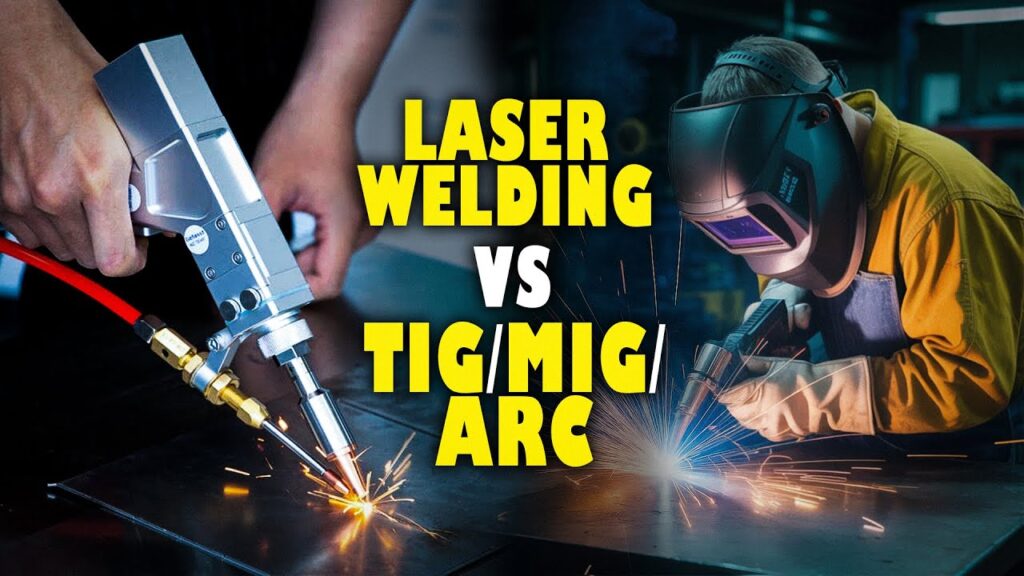
A handheld laser welder in your shop can pay for itself in months — or drain your budget for years. The difference comes down to one thing: buying the right machine at the right price for your actual workload.
The 2026 market looks very different from two years ago. Entry-level units now drop below $3,500. Industrial-grade 2000W systems are now within reach for mid-sized fabrication shops that couldn’t justify the cost before.
But lower prices have also flooded the market with cheap machines. Many of them look identical on a spec sheet.
This guide cuts through that. It breaks down real 2026 pricing by wattage, runs a straight laser welder vs TIG welder cost comparison over three years, and tells you who should buy now — and who should wait.
2026 Handheld Laser Welder Price Guide
The 2026 handheld laser welder market runs from $1,599 to $50,000. Every dollar in that range means something different — it all depends on what you’re welding.
| Use Case | Level | Wattage | Price | Recommendation |
|---|---|---|---|---|
| Light jobs / beginners | 🚀 Start | 1000–1200W | $1,600–$4,200 | Entry choice |
| Daily work / small business | ⭐ Popular | 1500W | $4,500–$6,200 | Best value |
| Batch production | ⚙️ Production | 2000W | $4,600–$7,280 | Scale faster |
| Heavy industrial use | 🏭 Industrial | 3000W | $9,800+ | Max efficiency |
What Really Moves the Price Needle
Beyond raw wattage, four cost factors add up fast:
- Power jumps: Each tier carries a real premium — +26% from 1.2kW to 1.5kW, +35% from 1.5kW to 2kW, and +67% from 2kW to 3kW
- Cooling system: Air-cooled units stay in the $2,000–$5,000 range. Water-cooled systems add $500–$2,000 to the base price
- Brand origin: Asian imports and Kirin systems run $1,800–$6,200. IPG and European-built machines start at $13,000 and climb to $50,000
- Cable length and features: Oscillation heads and 10–20m cable extensions add $1,000–$5,000 depending on the setup
The handheld laser welder on the spec sheet and the machine in your hands are two different products. Price tier is where that gap first shows up.
What You Get at Each Price Tier: Entry vs Mid vs Industrial
Spend $2,500 on a laser welder and you solve one problem. Spend $8,000 and you solve five. Spend $25,000 and you’re buying a system — not just a machine.
That’s the clearest way to think about tier differences in 2026.
Entry Tier ($1,600–$4,200): One Job, Done Well
Entry handheld laser welders are straightforward about what they are. They handle thin material, light repair, and low-volume runs without complaint. That’s the deal.
What you don’t get: sustained duty cycles, advanced oscillation heads, or build quality built for a production environment. Run one of these eight hours a day and you’ll see where costs were cut fast.
For a small shop welding occasional stainless under 3mm, that’s fine. The machine earns its keep.
Mid Tier ($4,500–$7,280): Where Most Shops Land
This is where the value math starts working. Mid-tier handheld laser welder machines offer higher usage ceilings, better cooling, and support options that entry handheld laser welders don’t have. The “Most Popular” label exists for a reason. These units hit the sweet spot — features that justify the price jump, without the industrial-level sticker shock.
- Production runs up to 6mm
- Duty cycles hold steady
- Wire feeder integration works without issues
Industrial Tier ($9,800+): Buying Uptime, Not Just Power
Premium handheld laser welders sell one thing above all else: reliability under continuous load. Unlimited duty cycles. Priority support. Redundant systems built for shops where downtime has a real dollar figure attached.
Buyers at this level know what unplanned stops cost per hour. That’s who this tier is built for.
Handheld Laser Welder vs TIG vs MIG: True Cost Comparison Over 3 Years
The sticker price is the least important number in this decision.
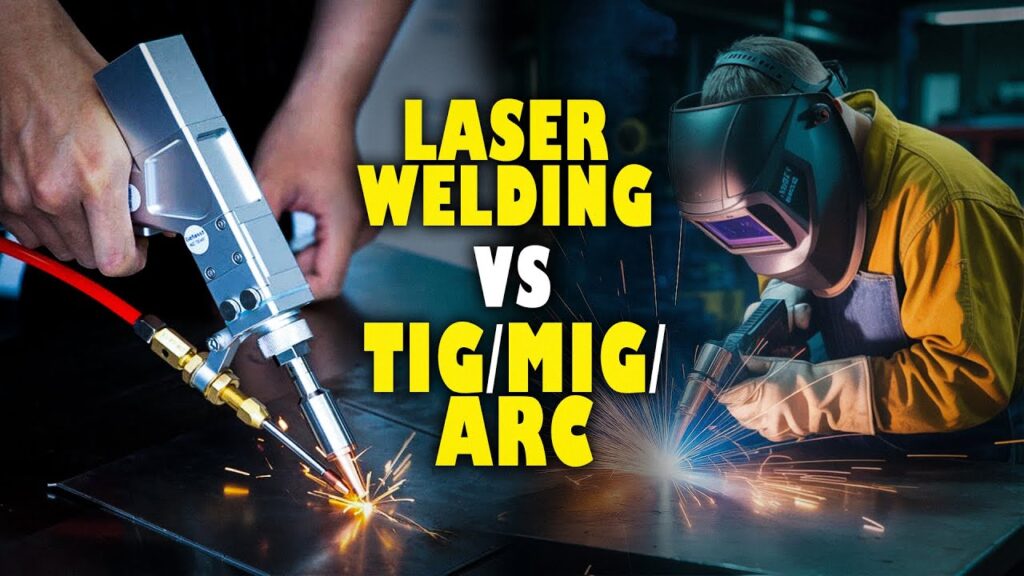
A $3,000 TIG setup looks cheap at first. By year two, grinding wheels, electrode replacements, shielding gas bills, and post-weld finishing hours all stack up fast. A $4,500–$6,200 handheld laser welder looks more expensive at first glance. But it runs 4–10× faster than TIG. It also leaves a weld clean enough to ship — no grinder needed.
That gap — between what something costs and what something costs — is where the real comparison lives.
The Three-Year Ledger
Start with the upfront investment. A capable TIG or MIG system runs $2,000–$50,000 depending on configuration. A 1500W handheld laser welder falls in the $4,500–$6,200 range. The price gap between the two isn’t always as wide as most people expect.
Operating costs are where the story shifts.
At 2,000 hours of use per year, laser welding totals $5,500–$38,000 per year in energy, consumables, and maintenance. TIG/MIG energy alone runs $1,000–$3,000 — but that number leaves out consumables, nozzle cleaning, wire replacement, and electrode wear. Add those in, and the cost jumps.
Over three years, a 1500W laser welder adds up to $21,000–$120,000 in total ownership cost. A comparable TIG/MIG system hits $13,000–$59,000 in energy alone — and actual costs go higher once you count consumables.
Where Laser Welding Recovers the Gap
Three clear advantages close the cost gap fast:
- Post-processing elimination: No grinding. No spatter cleanup. No polishing runs. TIG/MIG needs all of it — every weld, every time
- Material savings: Laser welding drops shielding gas use by 30–40% and wire use by 10–15%
- Labor efficiency: New operators hit productive output in 1–2 days. TIG certification takes weeks
At high volume, the numbers favor laser welding. At low usage, TIG/MIG is still the cheaper choice — and that’s the straight answer most guides skip.
ROI Calculator: How Fast Will a Handheld Laser Welder Pay for Itself?
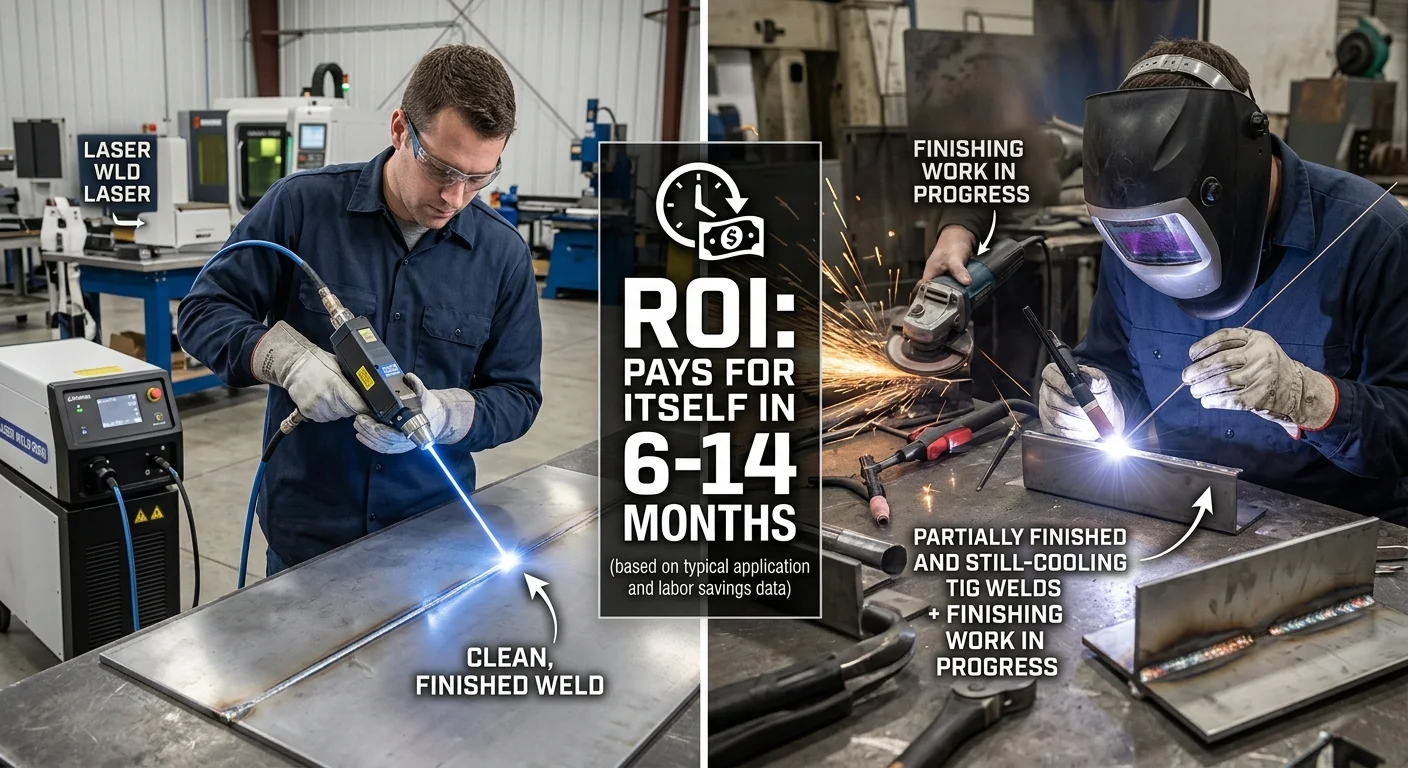
Real shop data from 200+ installations tells a consistent story: most handheld laser welders pay for themselves in 6 to 14 months.
That range matters. Where you land depends on your current welding volume and what you’re spending on labor, rework, and finishing time right now.
Run the Numbers Yourself
The formula is simple:
Payback Period (months) = Total Investment ÷ (Annual Savings ÷ 12)
Here’s what that looks like in practice:
- $6,200 machine saving $12,000 per year → payback in 6.2 months (real-world: ~7–8 months with ramp-up and training time included)
- $5,500 machine generating $8,000 in annual profit → payback in 8.3 months, Year 1 ROI of 45%
- $6,000 machine on thicker material runs → payback in 6.0 months
The five-year picture on that $6,000 investment? ~$60,000–$120,000 in net returns at conservative estimates.
Where the Savings Come From
Speed gains get attention. The downstream savings are where the real money lives:
- 60–75% reduction in welding labor time
- 80–90% less post-weld grinding and finishing
- 40–50% less filler material consumed
- Rework rates drop to near zero — versus the 8–12% typical in TIG/MIG environments
How to Calculate Your Own Payback
Four steps:
- Add up your current annual welding costs — labor, materials, rework, overhead
- Take that number and cut it by 50%. That’s your laser savings estimate
- Divide your machine investment by your monthly savings figure
- Payback under 12 months? The purchase math works in your favor
ROI above 40% with payback under two years — that’s the industry benchmark for a strong buy signal. One more number worth knowing: these machines hold 15–20% of original value at resale after five years. Your downside is far more limited than the sticker price suggests.
Brand-by-Brand Price Analysis: What You’re Paying For

Three brands dominate buyer conversations in 2026. Each sits in a different price tier — and the gap between them has clear reasons behind it.
IPG LightWELD: Paying for the Patent ($22,000–$39,000)
IPG’s air-cooled handheld laser welder design is patented. That one fact alone justifies a big part of the premium. You also get CE and UL certifications, global after-sales support, and a brand name that signals quality before the machine ships. Stack all that together, and the 40–100% markup over base-tier machines starts to make sense.
Market data puts IPG’s handheld laser welder Pricing Power Index at 110–112. The brand holds 32–40% above the category average — and that’s not a temporary position. For high-volume shops where insurance compliance and uptime matter more than purchase price, the premium is built into the business case. It’s not just marketing.
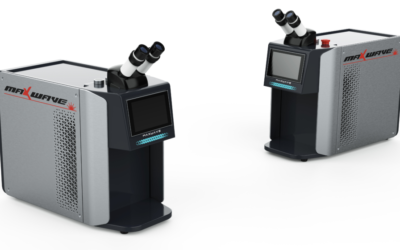
MaxWave / STYLECNC: The Serious Mid-Tier ($3,600–$7,280)
Do your homework here, and this bracket pays off.
| Price Band | What You’re Getting | Value Signal |
|---|---|---|
| $3,600–$5,000 | 500W IPG diode, basic chiller | 20–30% below US equivalent |
| $4,600–$5,600 | 1kW Raycus fiber, air-cooled | 2x output-per-dollar vs cost |
| $6,000–$7,280 | 2kW Maxphotonics, water-cooled, auto-focus | 2.5x efficiency gain |
These handheld laser welder machines skip the middlemen, not the quality. Distribution costs drop. You keep the savings. The value-to-price ratio at this tier is hard to argue with.
XTool / XFH: Buyer Beware Below $4,000
The risks here are specific — and measurable. Generic laser sources fail at 3x the rate of IPG or Raycus units within the first year. Optics degrade 40% before reaching 500 hours. Missing CE certification adds 15% downtime risk from compliance gaps. A one-year warranty versus two years ties directly to a 25% spike in repair costs.
So what’s the floor price that makes sense? Van Westendorp willingness-to-pay data for this segment points to $3,000–$4,000. Drop below $2,000, and buyers start doubting quality. That doubt is well-founded.
Hidden Costs Most Buyers Miss Before Purchasing
Protective lenses and nozzles wear out over time. Budget $200–$600 per year depending on duty cycle and material type. Cheap replacements can reduce weld quality — but with proper parts, you maintain consistent, high-quality results with minimal rework.
Chiller maintenance on water-cooled units adds another $300–$800 per year, covering coolant replacement, filter cleaning, and occasional pump servicing. For many users, air-cooled systems eliminate this cost entirely, simplifying operation and reducing maintenance.
Shielding gas isn’t free. Even at 30–40% lower consumption than TIG, a busy shop using nitrogen or argon may spend $800–$2,000 per year. The difference is, faster welding speeds mean more completed jobs and higher daily output.
Electrical infrastructure upgrades can catch new buyers off guard. Higher-wattage systems — 2000W and above — may require panel upgrades costing $500–$2,500. But this is typically a one-time investment that enables stable, high-efficiency production long term.
Add these up before you lock in your budget — but also consider what you gain. A handheld laser welder isn’t just a machine cost — it’s a productivity upgrade. Less rework. Faster jobs. Lower labor dependency. In many cases, the return comes quicker than most buyers expect.
Who Should Buy a Handheld Laser Welder (And Who Should Wait)
Volume is the deciding factor. Everything else comes second.
Your shop runs 100–200+ welding hours per month? The math points straight to laser. HVAC contractors, automotive repair shops, metal fabricators, on-site construction crews — these operations cut 50–80% of post-weld finishing compared to MIG or TIG. That time savings adds up month after month.
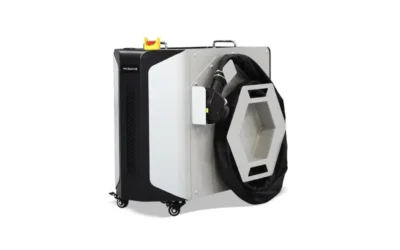
Fieldwork operators get another win: portability. The MaxWave HW1500 handheld laser welder weighs 56 KG and runs in temperatures from -20°C to 40°C. Large fixed objects, confined spaces, job sites with no welding bay — this machine reaches places traditional setups can’t.
Precision shops fit the buy list too. Electronics assembly, custom fabrication with tight geometries — the minimal heat-affected zone means no warping, no distortion, no rework.
New operators? The learning curve runs 5–15 minutes. That alone reshapes the labor math.
Hold off if:
- You weld fewer than 100 hours per month — the upfront cost won’t recover fast enough
- Your work is thick plate that needs robotic systems running fixed, repeatable cycles
- Your team is already TIG-certified and production volume doesn’t justify retraining
- Budget is tight and scale is small — the savings outpace costs at real volume, not low volume
The welding machine isn’t the question. Your workload is.
Conclusion
The numbers don’t lie. A handheld laser welder in 2026 isn’t just an upgrade — it’s a profit engine. For small shops, it means jobs finished faster, fewer mistakes, and more money made every day. If you’re welding more than 15 hours a week on stainless, aluminum, or thin metals, sticking with traditional methods is quietly draining your time and margins — job after job, day after day.
And here’s the reality: doing nothing isn’t neutral. Every week you delay is revenue you don’t get back. The 1500W tier is where most shops start — fast, controlled, and built for real-world work. Make the switch, and you’ll feel it immediately: cleaner welds, smoother workflow, and more output without relying on extra labor.

0条评论