
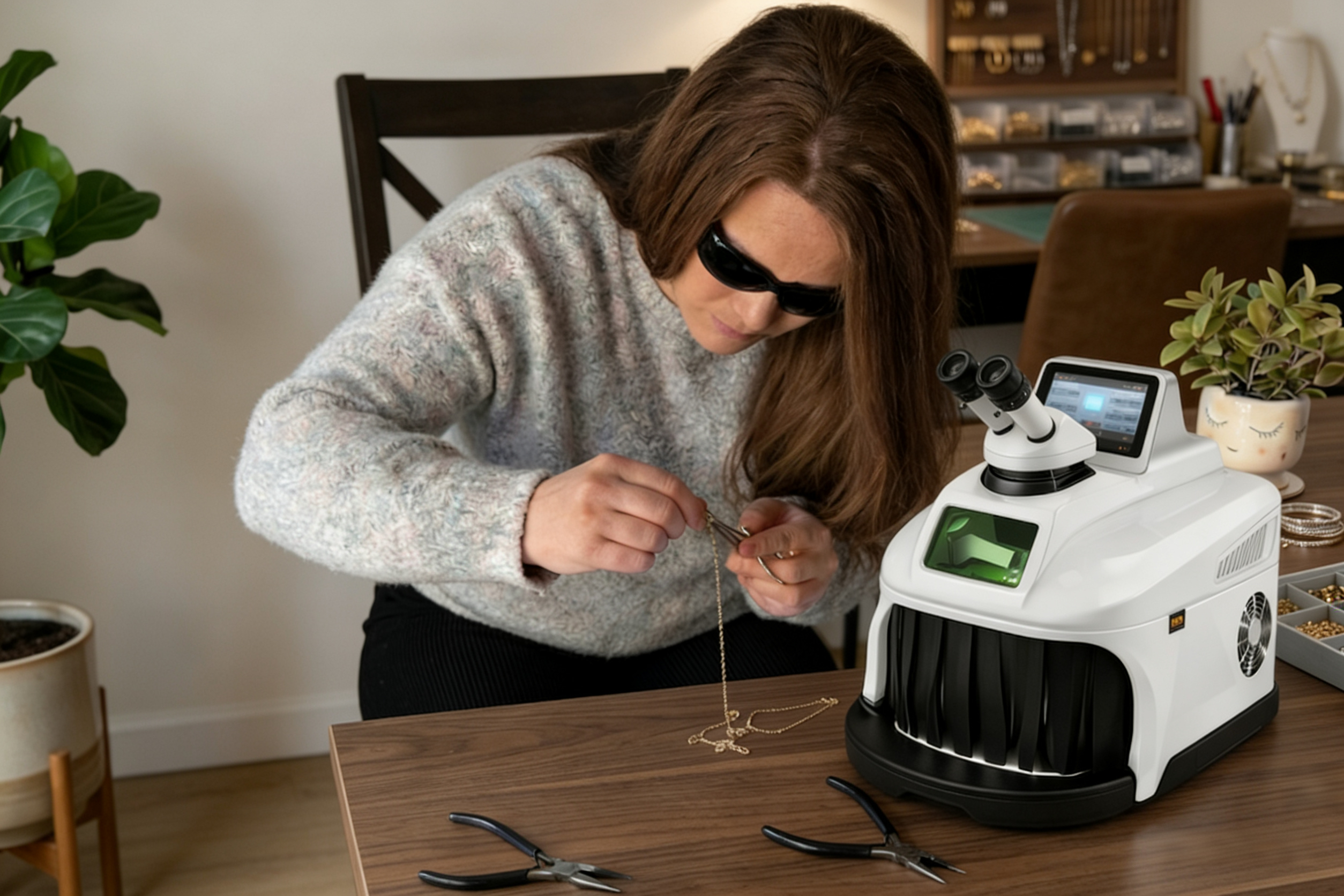
Picking the wrong welder costs you more than money. It costs you clients, confidence, and momentum — right when your permanent jewelry business needs all three.
Your budget might be $300. Or you’re looking at a $2,000 professional rig. Either way, you want to know which machine is actually worth it. Maybe your current welder feels like it’s holding you back. This guide was built for exactly that decision.
We evaluated the top pulse arc welding jewelry machines on the market. Each one was ranked by real-world performance, business stage fit, and actual value for money. No vague ratings. No filler.
You’ll get the clearest breakdown available on the best permanent jewelry welder machines in 2026 — so you can invest once, invest right, and get back to building something real.
The 7 Best Permanent Jewelry Welders Compared
Seven machines. One table. No more guessing which one is right for you.
| Machine | Price | Best For | Power Range | Weight | Warranty | Overall Score |
|---|---|---|---|---|---|---|
| MaxWave Qcw | $$1,399 | Beginners + scaling businesses | 1–30J (0.5J steps) | 2 lbs | 3 years | ⭐⭐⭐⭐⭐ |
| Orion mPulse® 2.0 | $1,699 | Professional studios | 1–30J (0.5J steps) | 4 lbs | 3 years | ⭐⭐⭐⭐⭐ |
| Zapp Plus® 2.0 | ~$999 | Beginners + mobile | 1–30J (30 levels) | 1.9 lbs | 3 years | ⭐⭐⭐⭐½ |
| Pepetools Helix | $1,499 | Serious mid-stage artists | 1–30J (1J steps) | 2 lbs | Standard | ⭐⭐⭐⭐ |
| Lampert PUK 6 | $6,855 | Precision laser work | Laser-grade | Compact | Standard | ⭐⭐⭐⭐½ |
| LaserStar 993 iWeld | $17,500+ | High-volume silver/platinum | 0.10–180J | Stationary | Commercial | ⭐⭐⭐⭐½ |
| Orotig Revo X² | $$$$$ | Production shops | Laser | Stationary | Commercial | ⭐⭐⭐⭐½ |
- The one-line verdict on each:
- MaxWave Qcw — Start strong. Scale fast. Built to grow with your business, no early upgrade needed.
- Orion mPulse® 2.0 — Best all-around pulse arc. Every other machine on this list gets compared to it.
- Zapp Plus® 2.0 — Best value under $1,000. Argon-ready, easy to pack, and zero learning curve.
- Pepetools Helix — Best mid-range. Covers every common metal type with a downloadable settings chart.
- Linked Luxe — Best for getting started right away. It grows with you until you need something more.
- Lampert PUK 6 — Best precision laser entry point. 2.5× cheaper than the LaserStar.
- LaserStar 993 iWeld — Best for production volume. Too much machine unless you run 50+ welds a day.
- Orotig Revo X² — Best for silver-heavy, high-output shops. A solid pick for studios that need laser-level consistency across every piece.
Best Starter for Real Growth: MaxWave — Built to Launch and Scale
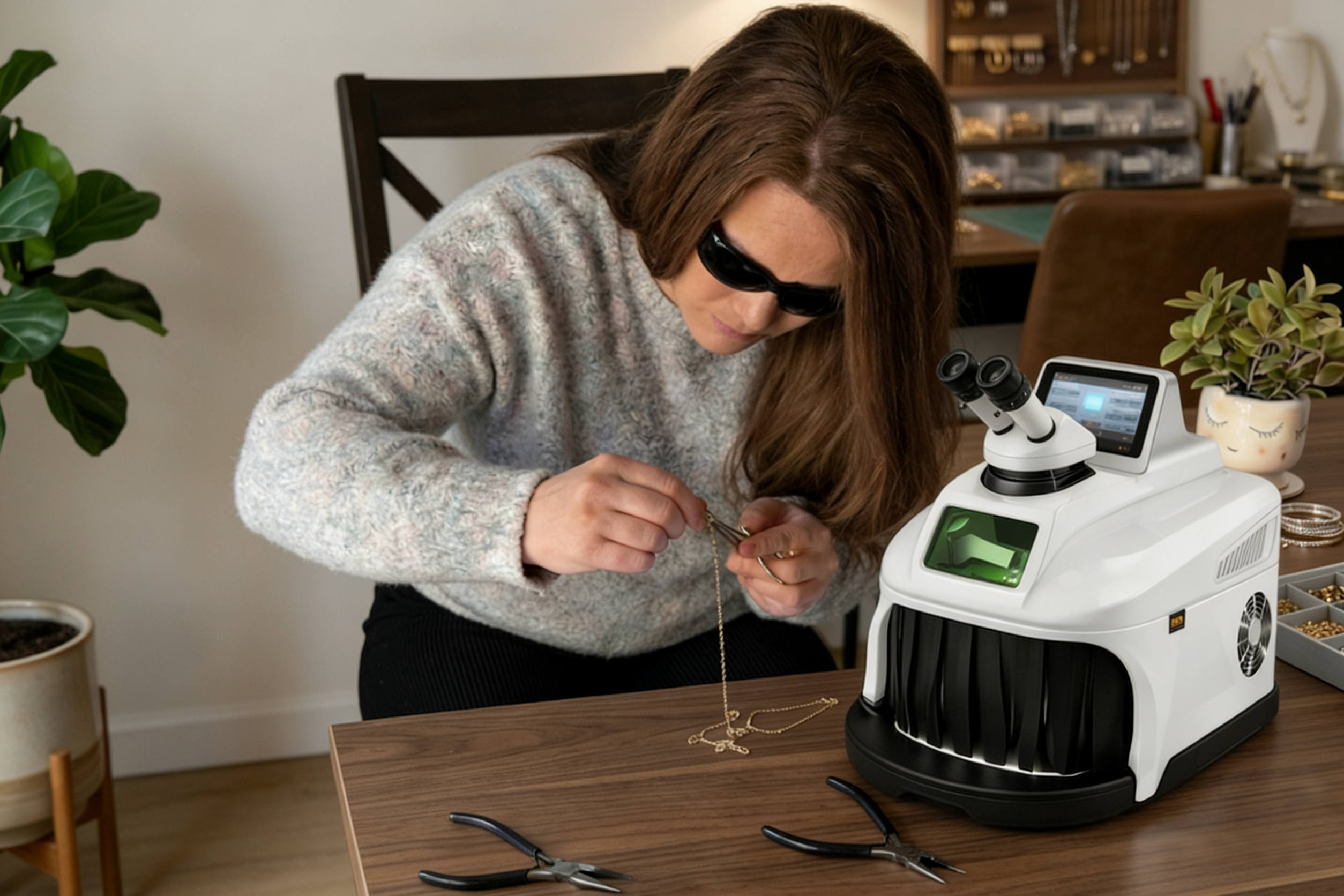
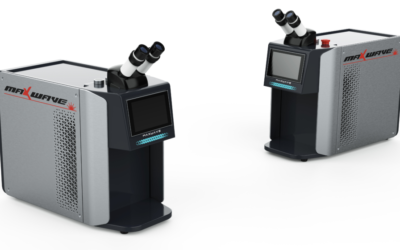
The MaxWave permanent jewelry welder is made for one type of entrepreneur: someone who wants to start strong and avoid outgrowing their machine too quickly.
It’s not just an entry-level tool — it’s a smart starting point with room to grow. You get stable performance, consistent weld quality, and an intuitive setup that lets beginners start creating immediately. At the same time, the machine delivers a level of precision and reliability that feels closer to professional-grade equipment than typical starter models.
For entrepreneurs who want fewer limitations from day one, this is where you begin.
Performance That Covers More Than the Basics
MaxWave permanent jewelry welder handles everything beginners need — and more. Fine chains, gold, silver, gold-filled materials — all welded cleanly with minimal learning curve. The arc is stable, the control is responsive, and results are consistent even for first-time users.
Where it stands out is headroom.
Unlike basic entry machines, MaxWave doesn’t hit limitations as quickly. Medium-thickness chains, higher client volume, longer working hours — it keeps up without performance dropping off. That means fewer missed opportunities as your business grows.
Designed for Daily Use, Not Occasional Work
This isn’t a machine you outgrow in a few months.
MaxWave permanent jewelry welder is built for real business conditions — continuous use, multiple clients per day, fast turnaround environments like pop-ups, studios, and events. The system stays stable, requires minimal adjustment, and reduces operator fatigue with a clean, straightforward workflow.
You spend less time troubleshooting and more time serving customers.
A Smarter Long-Term Investment
Instead of thinking “starter machine,” think “foundation machine.”
With MaxWave, you can:
- Launch your permanent jewelry business quickly
- Handle steady client flow with confidence
- Delay (or even avoid) early upgrades
- Scale at your own pace without hitting immediate limits
It’s the kind of machine that grows with you — not one you replace as soon as things start working.
Start Strong. Scale Smoothly.
If your goal is to test the market, MaxWave gets you there.
If your goal is to build a serious business, it stays with you longer than most.
Start here — and keep growing without looking back.
Best Overall: Orion mPulse® 2.0 — The Professional Standard
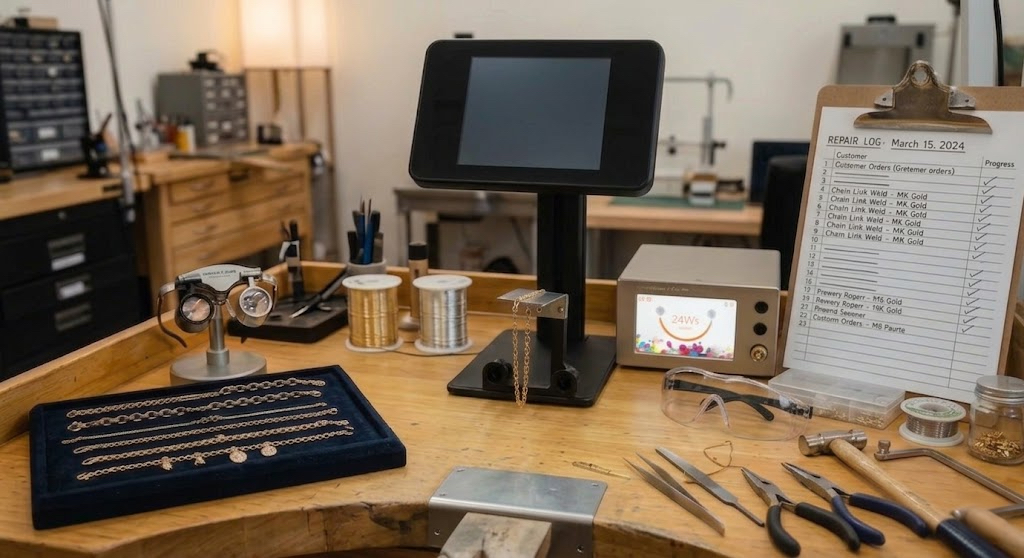
Experienced permanent jewelry artists keep coming back to Orion. It’s not the flashiest name out there — it just works, every time, at a level that protects your reputation every time you press that stylus.
The mPulse® 2.0 permanent jewelry welder runs a 1–30 joule power range, split across two precision zones. Zone one covers 1–15J in 0.5J increments. That half-joule control is where permanent jewelry work really happens. Fine 14K gold chains, delicate 925 silver jump rings, thin wire repairs — all of it needs micro-level energy tuning. Most machines can’t hit that mark with precision. Zone two extends to 30J for thicker materials. So you get solid range across different client requests, all from one machine.
What sets the mPulse® 2.0 apart from the competition is Tru-Fire® Technology. It reads ground contact strength in real time and auto-adjusts energy output at low levels. That means the machine handles the variables you can’t always control during a busy pop-up event. Fewer misfires. Cleaner welds. Less rework.
Specs That Matter in Practice
- Weld spot diameter: 0.5–1.5 mm — tight enough for precision permanent bracelet work
- Weight: 4 lbs — compact enough for mobile setups
- Display: 5″ 10-point HMI touchscreen with updateable software — built for longevity
- Argon-compatible: 1/4″ port for oxidation-free welds on delicate chain types
- Stylus cord: 72.75″ tip-to-tip — solid working range at a busy station
- Warranty: 3 years
Who This Machine Is Built For
Running permanent jewelry as a real business — fixed studio, regular pop-ups, or a growing client calendar? The mPulse® 2.0 gives you the consistency that protects your income. It’s not the right starting point for someone doing one event a month. For operators who need clean welds, fast, across materials from fine silver to heavier gold-fill — this is the professional standard, and it earns that title.
Best for Beginners: Zapp Plus® 2.0 — Highest Value Entry Point
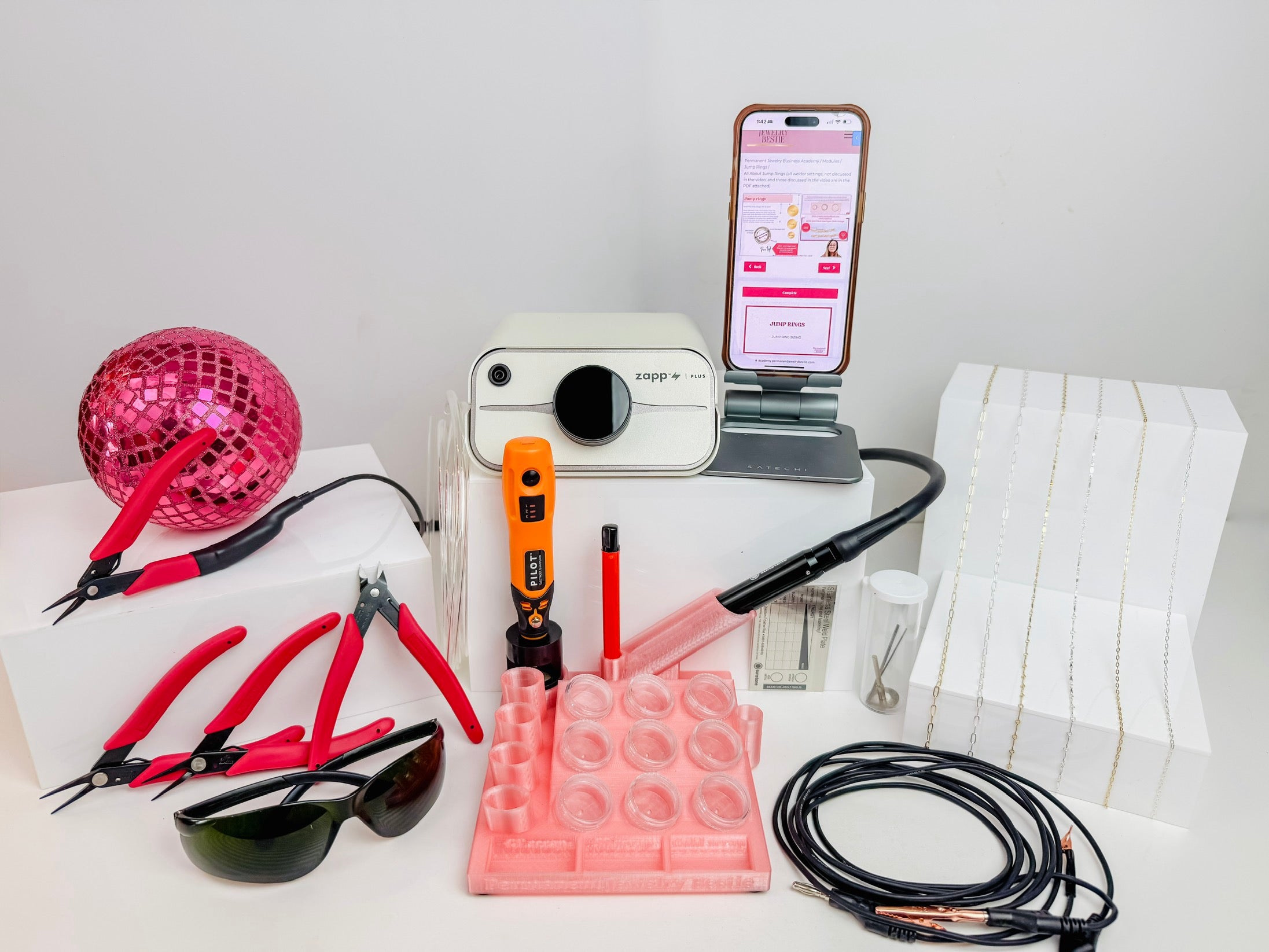
Under $1,000. Argon-ready. 1.9 lbs. That’s not a beginner machine — that’s a business starter kit wearing a beginner price tag.
The Zapp Plus® 2.0 permanent jewelry welder is built around one goal: take away every reason a new permanent jewelry artist might give up. Setup is four steps. Plug in. Connect the stylus. Attach the argon tubing. Dial in your power. Done. No complicated menus. No software to sort through before your first weld. Just a physical dial with 30 precise energy levels from 1–30J — twist to select, push to lock.
Zero welding background? That single-dial setup keeps you confident instead of lost. You pick your level, lock it in, and start welding. No guesswork.
Specs Worth Knowing
- Weight: 1.9 lbs — fits in a tote bag, travels to pop-ups without complaint
- Weld spot size: 0.5–2.0 mm — wide enough range to handle most chain types
- Stylus cord: 72″ — same working length as machines at twice the price
- Argon tubing: 7′ included — oxidation-free welds from day one
- Price: $999 (machine only; kit options available)
That 72″ stylus and 7′ argon tubing combo is rare below $1,500. Most entry-level permanent jewelry welders cut those features out. Zapp Plus® 2.0 keeps them in.
Who Should Buy This
Mobile artists. New studio owners. Anyone starting a permanent jewelry business who needs solid, reliable welds without a $2,000+ price tag. This machine won’t out-perform the mPulse® 2.0 — it’s not built to. That’s fine. For artists building their first client base, the Zapp Plus® 2.0 gives you what you need. Nothing extra. Nothing that gets in the way.
Best Mid-Range: Pepe Tools Helix — Reliable Growth Machine for Serious Starters
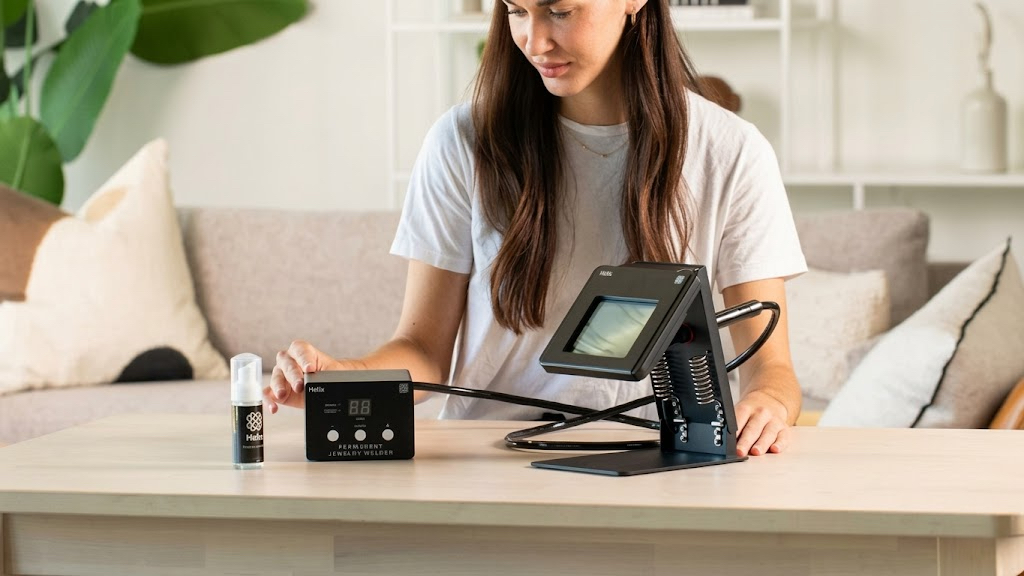
At $1,499, the Pepetools Helix permanent jewelry welder lands in a smart spot. You’re past the “just testing the waters” phase, but not ready to spend $2,000+ on a professional rig. This machine was built for that gap — and it fills it well.
The Helix runs 1–30 joules in 1-joule increments. That’s a wider material range than most mid-tier machines offer. Gold-filled, sterling silver, 14K, platinum, copper, brass, stainless steel — one machine covers all of it. The 0.5–1.5mm spot size keeps precision work tight, and at 2 lbs, you can take it anywhere without hassle.
Settings That Remove the Guesswork
The Helix permanent jewelry welder ships with a downloadable PDF power chart. No more burned jump rings while you hunt for the right settings. For 22-gauge sterling silver or 14K gold, dial between 11–14 joules. Finer 26-gauge work drops to 3–4 joules. These aren’t rough estimates. Pepetools gives you a clear starting point so you’re not guessing from day one.
An Ecosystem, Not Just a Machine
This is where the Helix pulls ahead of other machines at this price. You can order argon gas, jump rings, and chain stock straight from Pepetools. The starter package comes with 20 feet of assorted chain (gold-filled and sterling silver, over $200 value) plus an argon regulator. You’re welding on day one — not spending week two tracking down supplies.
Real-world feedback backs this up. Users report sterling silver welds that perform “million times better” than their old tools. Clean output across the full joule range, every time.
Who this is for: Artists ready to move past entry-level output — without jumping to a professional machine budget just yet.
Professional-Grade Laser Option: LaserStar 993 iWeld & Lampert PUK 6 — Beyond Pulse Arc
Pulse arc permanent jewelry welder has limits. On 925 silver and platinum, those limits show up fast. You get distortion, heat creep, and inconsistent fusion on reflective surfaces. That’s not a technique problem. That’s a physics problem. Laser welding solves it.
These two machines sit in a different category. They’re not upgrades from the Zapp Plus® or the Helix. They’re purpose-built tools for operators who’ve maxed out what pulse arc can do.
LaserStar 993 iWeld — Factory-Grade Output at $17,500
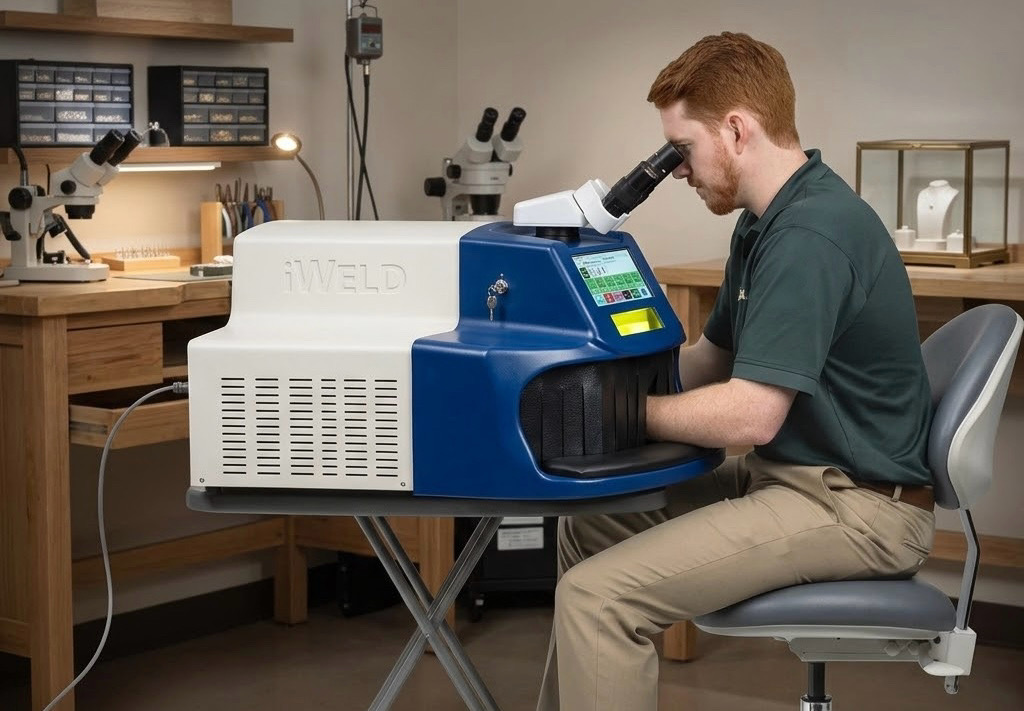
The numbers speak for themselves. 11kW peak power. Pulse energy from 0.10 to 180J. Spot sizes as tight as 0.10mm. A 4K 8MP HD camera with 15× magnification built into a 7-inch digital display. This machine runs 24-hour continuous operation — not rated for it, built for it.
Here’s what that means in real use:
- Deeper fusion on reflective metals
- A pinpoint heat-affected zone that stays put and doesn’t spread into surrounding material
- Weld strength that beats solder on silver and complex alloys
Studios doing detailed assemblies or high-volume silver repairs will see rework drop fast. Stronger welds mean fewer burned stones and less wasted material.
At $17,500–$20,000, the ROI math works at volume. You need 50+ welds per day, steady silver or platinum work, and production-level output. Not there yet? This machine is overkill. Pulse arc still covers you.
Lampert PUK 6 — The Precision Entry Into Laser at $6,855
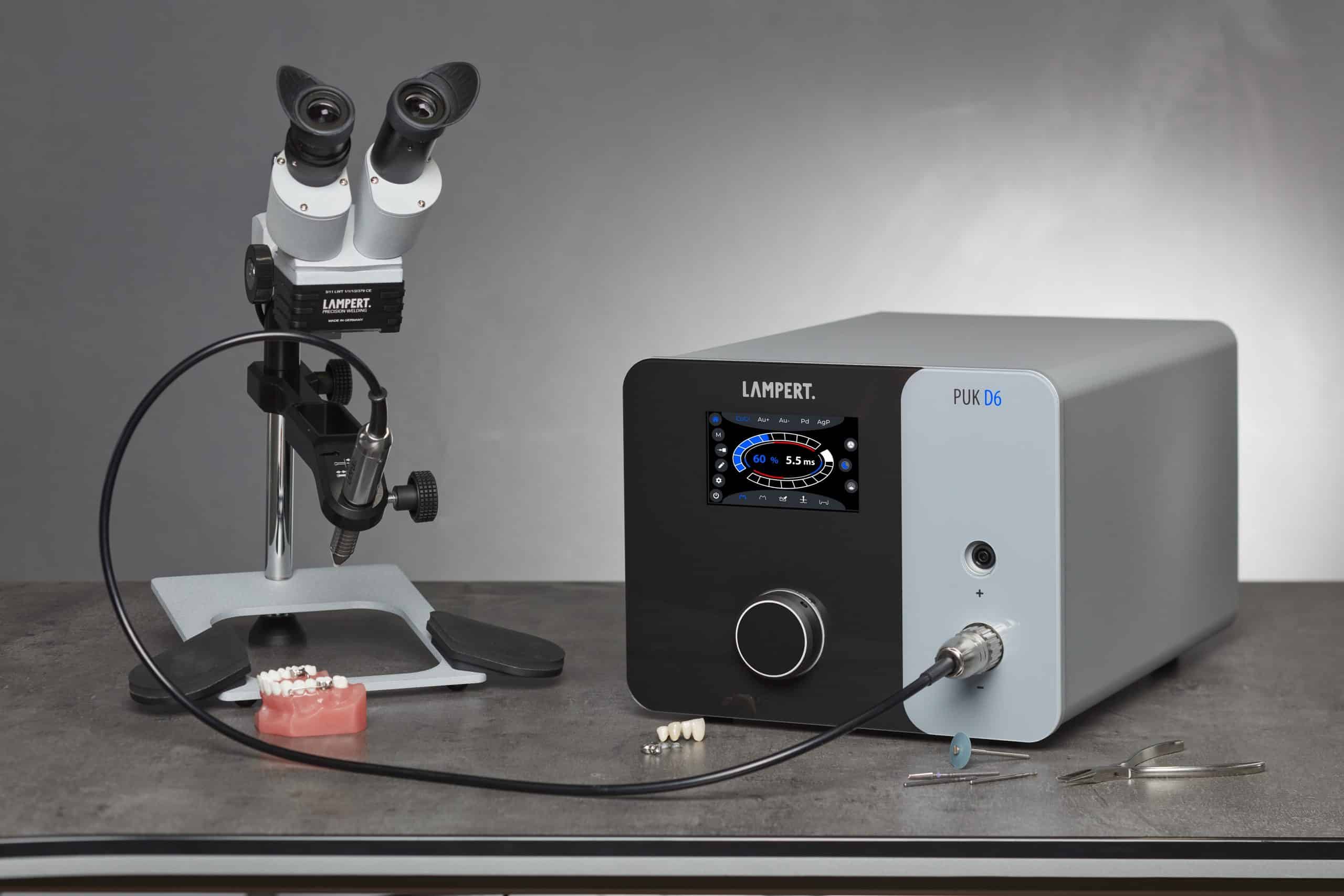
The PUK 6 permanent jewelry welder brings high-precision laser within reach — no factory-grade price tag required. It costs 2.5× less than the LaserStar. That makes it a solid fit for smaller studios that need tighter accuracy than pulse arc can deliver. No $17k+ commitment.
The honest bottom line: Neither machine belongs in a startup jewelry budget. For established studios growing into custom work, silver-heavy menus, or high-volume daily production — pulse arc falls short. These are the tools that fill that gap.
How to Choose the Right Permanent Jewelry Welder for Your Business Stage
The permanent jewelry welder machine that’s perfect for someone six months in will hold back someone doing 40 welds a day. Business stage isn’t a soft factor. It’s the most important filter — more than price, brand, or specs.
Here’s how to match the machine to where you are right now.
Just starting out? Forgiving energy control matters most. Advanced digital controls — like those on the Orion PJ — let you dial in precise output with no metalsmithing background needed. The machine handles the hard part while you build confidence.
Tight budget, real ambition? The Zapp and Zapp Plus® 2.0 are built for this exact situation. You’re not giving up on the fundamentals. You’re choosing runway over features you don’t need yet.
Established and scaling? Track record becomes non-negotiable at this stage. Look for a manufacturer with 15+ years of welding expertise, verified safety certifications (UL, ETL, CSA, or CE), and overnight parts replacement. A critical booking can’t wait. One machine failure at peak season hits your revenue — not just your schedule.
Beyond specs, treat the manufacturer as a business partner. Ask these questions:
- Do they offer responsive support on weekends?
- Do they have a proven service record?
- Are they genuinely invested in the permanent jewelry industry?
These aren’t extras. They’re what separates a vendor from a partner who keeps your business running.
FAQ: Questions Every Permanent Jewelry Business Owner Asks
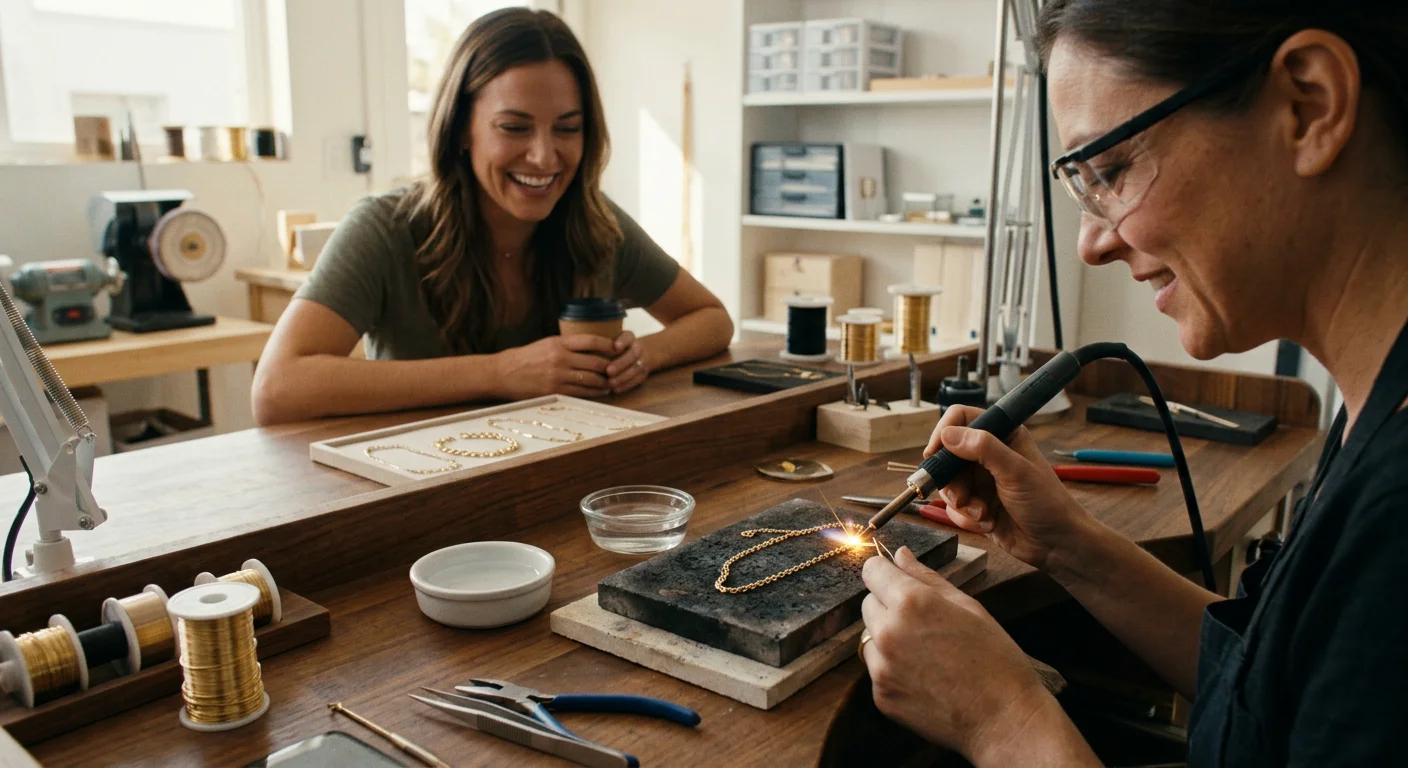
Real questions deserve real answers. Not the polished kind you find on a vendor’s homepage.
Do I need a license to offer permanent jewelry services?
In most states, no license is required. Here’s what you do need:
– Business registration
– A resale license for sales tax collection
– A dedicated business bank account
– A clear refund and terms policy
Check your local bylaws — rules differ by region.
How much does it cost to start?
Expect $2,500–$10,000 for a real launch. That covers your welder, chain stock, safety gear, and training. Many operators start with a starter kit. They scale up once bookings prove the demand is there.
Do I need welding experience?
No. Zero. Quality starter kits come with professional training included. It covers machine setup, safe welding practice, chain selection, and basic business operations. You’ll be ready faster than you expect.
How do I know if I’m buying quality chain?
Ask your supplier a direct question: is this solid gold, gold-fill, or plated? Mislabeled chain is a real problem in this market. Stick to hypoallergenic materials — 9ct solid gold, gold-filled, sterling silver. Vet your vendors before you commit to an order.
Where do most permanent jewelry artists make real money?
Pop-up events. Overhead is low, foot traffic is high, and ROI comes fast. Many operators fully recoup their equipment costs within just a few events.
Conclusion
The right permanent jewelry welder doesn’t just complete circuits — it starts businesses.
Launching your first pop-up with the Zapp Plus 2.0? Or scaling a high-volume studio with the Orion mPulse 2.0? The machine you pick sets the limit for what your brand can deliver. Buy too cheap, and you fight your equipment instead of building your clientele. Buy smart, and every spark becomes a selling point.
Here’s the straight truth: match the machine to your business stage, not your wishlist. Start where you are. Upgrade when revenue calls for it.
You now have the comparison data, the budget breakdowns, and the real-world context. Most buyers spend weeks hunting for this information. You’ve got it right here.
So stop researching. Start welding.
→ Pick your permanent jewelry welder, place your order, and book your first client.
Your business doesn’t begin when you feel ready — it begins when you make the move.

0条评论